


Advent

Hark! Born to Raise

Hark! Born to Raise

What kind of immortality do you dream of?

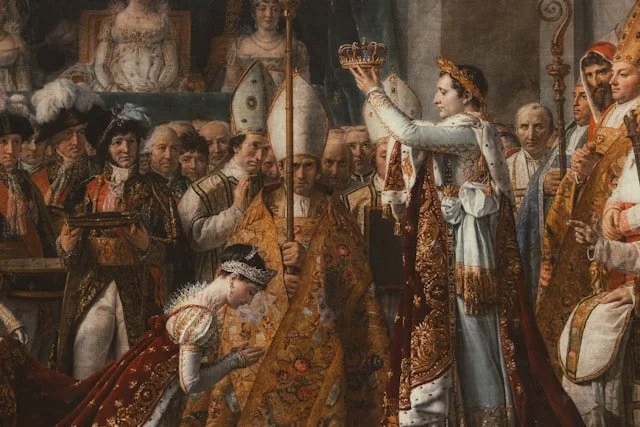
At just 19 years old, an ambitious commissioned officer of the French Royal Army faced a life-defining moment. As a revolution swept through France, would he support the people or the monarchy? His decision was based, as many would be throughout his life, more on strategy than belief. Which side would further his ambitions? As he would many times in his life, Napoleon Bonaparte backed the right side. Seven years later, Napoleon was commander of the French forces. He led an ambitious military campaign against the Austrians and their allies.


Hark! Ris'n with Healing

Hark! Ris'n with Healing

As we prepare for Christmas, we are diving into one of the most theologically rich Christmas carols ever written: Hark! The Herald Angels Sing.

December not only brings the celebration of our Lord’s birth, it often brings sickness. Just this week our daughter got hit with the flu. It’s appropriate that many of us might be a little needier this time of year as we are reminded that Jesus alone can bring healing. Do you need healing today? Does someone you love need healing?

Hark! Veiled in Flesh

Hark! Veiled in Flesh

In Talladega Nights, Ricky Bobby (Will Farrell) offers up an irreverent prayer to baby Jesus,

“Dear Tiny Infant Jesus...” Ricky prays. His wife interjects, “Hey, um... you know, sweetie, Jesus did grow up. You don't always have to call him baby. It's a bit odd and off puttin' to pray to a baby.” Ricky responds, “Well, look, I like the Christmas Jesus best when I'm sayin' grace.”

Some of us are more comfortable with baby Jesus as well. He can feel more approachable than the suffering Jesus on the cross or the reigning Jesus on the throne.

Throughout this Christmas season, we are examining profound truths in four lines from Charles Wesley’s (brother of John Wesley) popular hymn and Christmas carol “Hark! The Herald Angels Sing.”

Hark! Peace On Earth.

Hark! Peace On Earth.

Everyone loves Christmas! And what would Christmas be without its carols? In 1739, one of the most theologically rich carols ever was penned: “Hark! The Herald Angels Sing.” Its author, Charles Wesley, an itinerant evangelistic preacher and brother to John, was one of the most masterful hymn writers in history. In his lifetime, he wrote 6500 hymns (averaging more than two per week!). The lyrics we sing today are identical to Wesley’s original text in 1739, with one notable exception. His first line read, “Hark, how all the welkin rings.” Welkin means “heavens” or “sky.”

This Week's Recommendations

This Week's Recommendations
  1. Afraid of the darkChrys Jones says, “For those of us who have seen the Light, Advent is a time of sober remembrance. We are reminded of the darkness that once resided in us. We lived in the valley of the shadow of death without even realizing it. But the goodness and lovingkindness of God showed up!”

  2. Did the Son of God leave heaven when he came to earthKevin DeYoung answers, “The key is to understand that the Son of God descended from heaven in such a way as to still be in heaven. Christ’s incarnational descent did not involve a change to the divine nature or a change of location.”

Glory to God in the Lowest!

Glory to God in the Lowest!

Last week on The World and Everything in It George Grant considered “The Wisdom of paradox.” He concludes his reflection,  that Christmas is “the greatest and most remarkable paradox of all is revealed: He who was infinite, was yet an infant; He who was eternal, was yet born of a woman; He who was almighty, was yet nursing at His mother’s breast; He who was upholding the universe, was yet carried in His mother’s arms. Thus, Chesterton exclaimed, ‘Outrushing the depth of the fall of man is the height of the fall of God. Glory to God in the Lowest.’”

“Glory to God in the lowest.” What a mind-bending truth.

The Faithfulness of God of the Manger

The Faithfulness of God of the Manger

Recently we had someone over and as the night came to a close Angel warmly offered, “Let’s do this again soon!” I wilted as I processed just how many things were on our calendar in the coming month. Just like Angel did, I wanted to be with them again and soon, but her invitation made me flinch.


My wife Angel and I are very different people. Angel brings light and life everywhere. People are drawn to her, and she is drawn to people. One of the many things I love about Angel is how she gets caught up in a moment with people. In that space, it’s not unusual that she shares hopes with those we are with of spending more time together. And she means it: there is no doubt of her genuineness.

A Humble God?

A Humble God?

“I don’t compare myself with anybody, but nobody is better.” Michael Jordan

“They say the sky’s the limit, but I think my potential is beyond it.” Jay-Z

“I won’t be happy until I’m as famous as God” Madonna

“I won’t be a rock star. I will be a legend.” Freddie Mercury

“We’re more popular than Jesus now.” John Lennon

We tend to expect that greatest among us are also some of the most arrogant. And why wouldn’t they be? For many who make it to the top of their field, we can see how that arrogance can be a driving force for their greatness.

The Theology of the Manger

The Theology of the Manger

“God did not, as the Bible says, create man in his own image; on the contrary, man created God in his own image.” Ludwig Feuerbach dropped this theological bombshell three years before Friedrich Nietzsche’s birth. Feuerbach, a name forgotten by most, but who influenced Nietzsche, wrote these words in his book, The Essence of Christianity (1841). He argued that human beings project their own attributes and desires onto an imagined deity, creating God in their own image. This for Feuerbach, is the essence of Christianity (and indeed all religions), the deification of our human ideals. “What man wishes to be, he makes his God… God is the outward projection of a man’s inward nature.”

Christmas Songs: Song of the Lamb

Christmas Songs: Song of the Lamb

The majestic High King of Heaven came in human flesh to be born among livestock. As if to emphasize the connection between Jesus and sheep, God announced the birth of his son to shepherds. Not long after his birth, a flock of sheep surrounded the newborn. 

The babe born among the lambs is the Lamb who would be slain.

John the Baptist picked up on this connection. Seeing Jesus coming toward him, he declares, “Behold, the Lamb of God, who takes away the sin of the world!” (Jn 1:29). These words that announce Jesus’ ministry, will echo in eternity.