


Today I have the pleasure of sharing a poem by my daughter, Camille (age 21). It is from the perspective of King Ahaz (see 2 Chronicles 28).
You might wonder why a king would hesitate to remove false places of worship. Put yourself in his sandals. Tearing down high places meant disrupting cultural norms, challenging family traditions, and risking public backlash. If you were inclined toward people-pleasing, you would avoid touching those altars. You might say to yourself, “I’ll do what’s right before the Lord, but it’s not my responsibility to make them do what’s right.” If you were pragmatic, you might reason, “There are more pressing political and economic issues to address.” But God does not measure leadership by popularity or pragmatism. He measures it by faithfulness.
Who respects the body more? Christians or the world? I bet most Americans would answer that the world loves the body more than Christians do. After all, the world celebrates its sexuality and supports going after whatever our body desires. Many will judge their Valentine’s Day on whether it was a day they got what they desired.
Ours is an age of affirmation, and our bodies appear to be the object of that unquestioned affirmation.
But what if it isn’t true that our world truly values our bodies? What would it mean for issues such as gender and abortion if the Christian ethic is actually the worldview that honors the body most deeply?
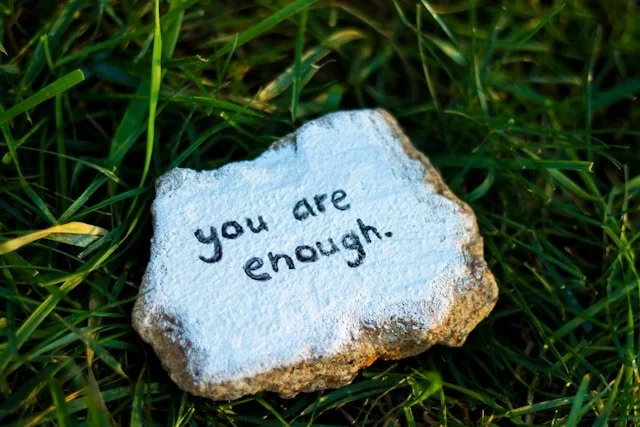
The reality behind our culture’s favorite mantra: Matthew McCullough begins, “I don’t know where it came from, but now it seems to be everywhere. I hear it on podcasts and TV shows. I’ve seen it on T-shirts and social media graphics. A quick search for it on Amazon brings up hundreds of results, ranging from books for kids and adults to silver charm bracelets to hoodies of many colors to embroidered makeup cases to wall hangings and throw pillows and stickers to place on your rearview mirror. I’m talking about the simple, uplifting mantra for our times: ‘You Are Enough.’”
Jesus wept (Jn. 11:35).
This is the shortest verse in the Bible.
It is profound as it applies to the heart of Our Lord, Jesus Christ; to those whom he came to save: You. Me. Us.
There is much pain and confusion in our world today. You don't need to look far to see it. Some of us have been brought to our knees in grief and in this moment cannot hardly see past it; the same can be said of those of us in the throes of financial woe; relational strife; physical affliction.
Hopelessness. Dread. Despair.
When peace feels impossible: Christopher Cook says, “As such, when Paul says “do not be anxious,” he is not instructing believers to numb their emotions, detach from their circumstances, or pretend life doesn’t hurt. He’s inviting us to recalibrate the affections of our hearts. And that recalibration begins with a theological claim far deeper than a surface-level command. It begins with presence.”
When waiting draws us near: Bethany Broderick says, “Our world seems allergic to waiting. We pay hundreds of dollars for faster shipping
Sign up to get The Bee Hive delivered to your inbox and receive a free 50 Books That Changed My Life (and Might Change Yours, Too) download!